
Beyond OCR: The Next Evolution in Document Management
Your documents are digital. But is the information inside them really working for you?
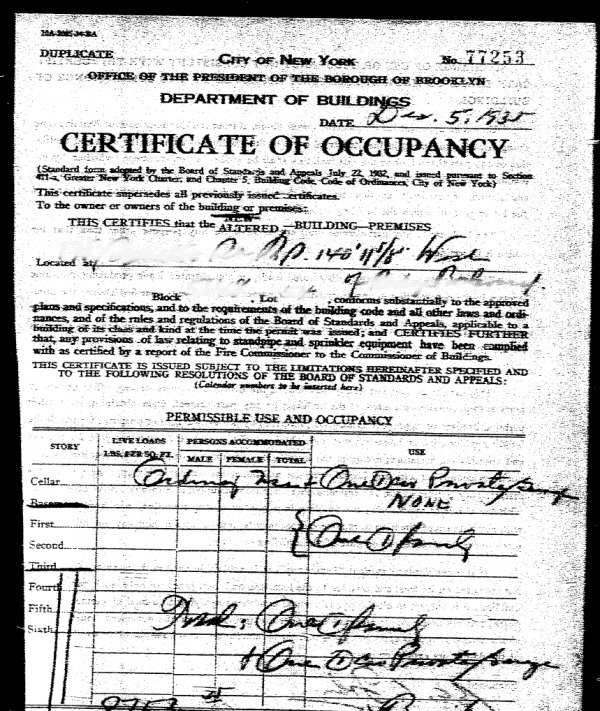
Imagine this. A resident contacts your building department requesting a certificate of occupancy from 1987. Your staff knows the document exists. Somewhere.
But locating it means searching through decades of records, opening multiple files, and reviewing documents one by one. What should be a simple request becomes a time-consuming process, pulling employees away from other important responsibilities.
Now imagine finding that same information in seconds.
For years, organizations have invested significant time and resources into converting paper records into digital files. Scanning and Optical Character Recognition (OCR) have made documents easier to preserve, search, and retrieve.
But there’s an important distinction.
A searchable document is not the same as usable data.
Your documents may already be digital, but the valuable information inside them could still be difficult to access, organize, and use.
That’s where Artificial Intelligence (AI) is changing the conversation.
Beyond OCR: Understanding the Difference
Traditional OCR technology converts scanned documents into machine-readable text. It allows users to locate words or phrases within digital files, significantly improving access compared to searching through filing cabinets.
However, traditional OCR has limitations, particularly when documents are unstructured, contain inconsistent formatting, or have visual obstructions.
Think about the types of records organizations manage every day.
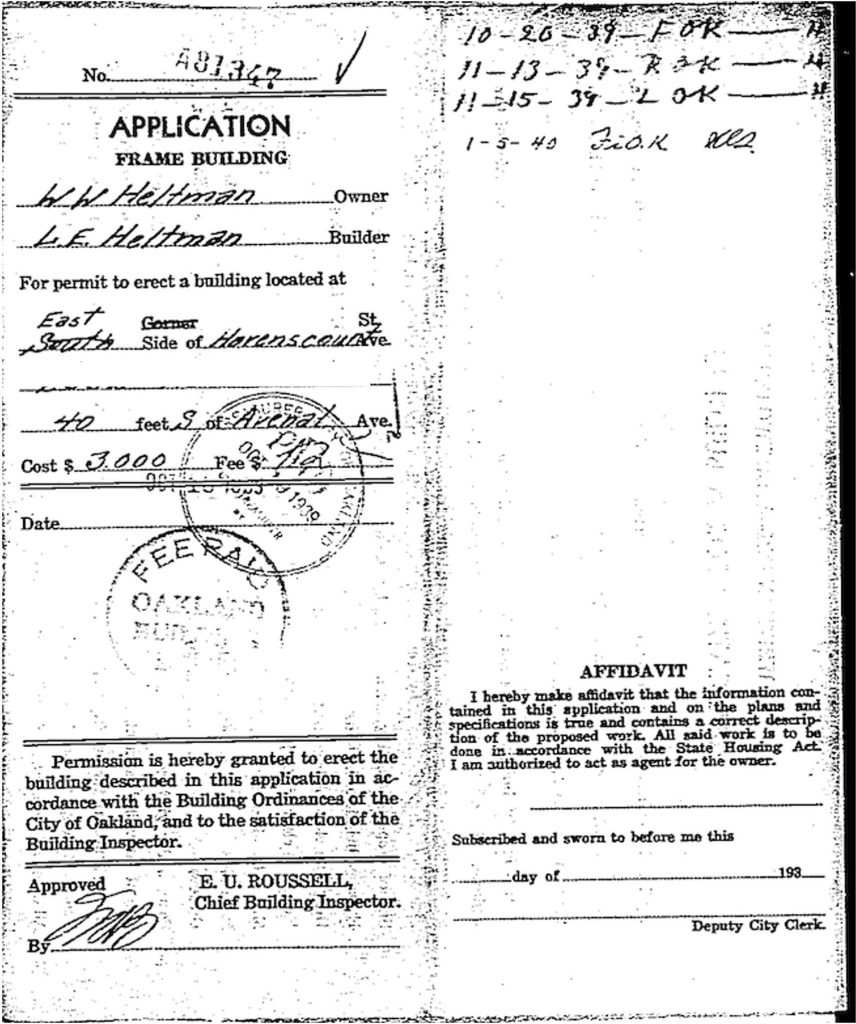
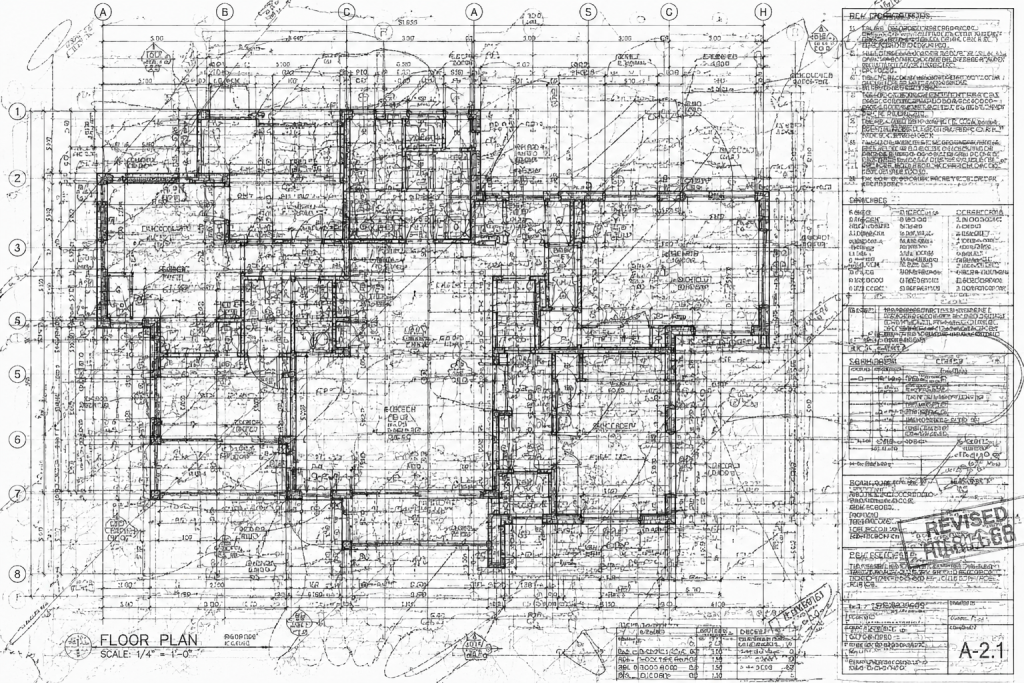
Some contain neatly printed text in clearly defined fields. Others include handwritten notes, overlapping information, tables, boxes, lines, stamps, and text appearing in unexpected locations.
Traditional OCR may struggle to accurately recognize characters when text intersects with lines, falls within complicated tables, or appears alongside other visual elements. Even when the text is recognized correctly, determining what that information actually represents can require additional processing or manual review.


This is where AI-assisted document processing becomes a game changer.
Rather than relying solely on character recognition or predetermined document layouts, advanced AI-powered systems can analyze the structure and context of a document to better understand the information it contains.
For example, an AI-assisted system may identify a permit number regardless of whether it appears at the top of a form, inside a table, or within a paragraph of text.
It may distinguish a property owner’s name from a contractor’s name, recognize important dates, or identify information across documents that have completely different layouts.
Modern AI-assisted document processing can also help interpret complex tables, forms, and irregular document structures that often create challenges for conventional OCR systems.
While poor image quality, severe obstructions, and difficult handwriting can still affect accuracy, these advancements significantly expand what organizations can accomplish with their existing records.
OCR helps computers read text. AI helps computers interpret the information and understand how it can be used…
…And that distinction can fundamentally change how organizations manage their documents.
From Searchable Documents to Actionable Information
Consider a building permit.
Traditional OCR may allow an employee to search for a property address, but someone may still need to open the document, locate the permit number, identify the contractor, verify the date, and manually enter that information into another system.
Now multiply that process across thousands—or even millions—of documents.
The time and administrative costs quickly add up.
AI-assisted data extraction takes document management a step further.
Rather than simply recognizing text, Intelligent Document Processing (IDP) can identify document types, recognize important information, and organize that information into structured data fields.
For example, AI may help extract:
- Property addresses, permit numbers, and inspection dates from municipal records.
- Invoice numbers, vendor information, and payment amounts from financial documents.
- Contract expiration dates and important terms from agreements.
- Student information and enrollment details from educational records.
- Relevant information from healthcare forms and administrative documents.
Instead of requiring employees to manually locate and enter every piece of information, AI can assist with much of the repetitive work.
The goal isn’t simply to find your documents faster. It’s to make the information inside them work for you.
The Hidden Cost of Information That Isn’t Accessible
Every day, organizations lose valuable time performing tasks that may be unnecessary.
An employee searches through multiple PDFs to locate a permit number. Another manually enters information from incoming invoices. A department spends hours reviewing older records to respond to an information request.
Individually, these tasks may seem routine.
Collectively, they represent a significant operational challenge.
These costs don’t always appear as a separate line item in a budget. Instead, they accumulate through lost productivity, delayed responses, repetitive administrative work, and staff frustration.
And for organizations already facing staffing shortages, increasing workloads, and limited budgets, those inefficiencies can become even more challenging.
AI-assisted extraction offers an opportunity to rethink how these processes are handled.
By reducing repetitive indexing and data-entry requirements, organizations may be able to redirect valuable employee time toward responsibilities that require experience, judgment, and personal attention.
For municipalities, that could mean responding to residents more efficiently.
For schools, it could mean helping administrative personnel manage records without spending countless hours entering information.
For businesses, it could mean accelerating document-driven workflows and reducing avoidable processing delays.
Technology should support the people doing the work, not create additional work for them…
How Does AI-Assisted Data Extraction Actually Work?
Modern intelligent document processing combines several capabilities to transform documents into structured, useful information.
Intelligent Document Classification
AI can help identify different types of documents, such as permits, certificates, invoices, contracts, inspection reports, and correspondence, even when formats vary.
This reduces the need for employees to manually separate, categorize, and organize large collections of records.
Context-Aware Data Extraction
Unlike traditional systems that often rely on fixed templates, advanced AI can recognize information based on context.
A permit number appearing at the top of one document and near the bottom of another may still be identified and captured.
AI can also help distinguish information that may otherwise appear similar, such as an application date versus an approval date, or a billing address versus a property address.
Processing Complex and Unstructured Documents
Many organizations manage records that were never designed for digital processing.
Historical forms, handwritten notes, tables, stamps, lines, boxes, and inconsistent layouts can make traditional OCR and template-based extraction difficult.
AI-assisted processing can analyze document layout, identify relationships between text and surrounding elements, and help extract information from documents that do not follow a consistent structure.
This can be particularly valuable for municipalities and other organizations managing decades of records created using different forms, technologies, and administrative procedures.
However, the quality and condition of the original documents still matter. Severely damaged records, obscured text, and complex handwriting may require specialized processing or human review.
Validation and Human Oversight
AI is powerful, but it isn’t infallible.
Poor image quality, handwriting, missing information, and unusual document layouts can affect accuracy.
Confidence scoring, validation rules, and exception handling can identify information requiring human review.
This allows automation to handle appropriate tasks while experienced personnel verify results where needed.
Integration With Existing Business Systems
Perhaps the most important benefit comes after the information is extracted.
Structured data can be integrated into document management platforms, databases, financial applications, permitting systems, and automated workflows.
An extracted contract expiration date might trigger a reminder. Invoice information could support an approval process. An incoming application could be classified and directed to the appropriate department.
The result is no longer simply a collection of searchable files.
It becomes information that can support everyday decisions and operations.
Your Existing Digital Archive May Be Your Biggest Opportunity
Here’s something organizations may not realize.
You don’t necessarily need to start a new scanning project to benefit from AI-assisted data extraction.
If your organization has already digitized thousands or millions of documents, you may be sitting on a valuable source of information that has never been fully utilized.
Those PDFs may contain decades of property records, contracts, correspondence, financial information, or administrative documents.
Although the documents are digital, the information within them may never have been organized into searchable data fields.
AI-assisted extraction can provide an opportunity to revisit those archives, identify useful information, and improve how it is accessed and managed.
For example, a municipality with decades of scanned building department records may be able to identify property addresses, permit numbers, dates, and other important information without manually indexing every field in every document.
Even when older documents contain inconsistent layouts, handwritten annotations, or complicated forms, AI-assisted technologies may offer opportunities that traditional OCR and manual indexing processes could not easily provide.
The feasibility, accuracy, and cost will depend on the condition of the records and the information being requested.
Nevertheless, the opportunity is significant.
You’ve already invested in preserving your documents. Now consider how to get more value from that investment.
Where Can AI-Assisted Extraction Make a Difference?
The applications extend across numerous industries and organizations.
Government and Municipalities
Building permits, certificates of occupancy, property records, planning documents, and resolutions can be organized for improved retrieval, more efficient departmental operations, and better responsiveness to public records requests.
For municipalities managing records across multiple decades, AI-assisted processing can also help address inconsistencies in historical forms and document layouts.
Education
Student files, enrollment applications, personnel records, and historical archives can benefit from improved indexing and reduced manual data entry.
Healthcare
Administrative forms, referrals, authorizations, and other records may be processed more efficiently while maintaining appropriate privacy protections, security controls, and human oversight.
Finance and Accounting
Invoices, purchase orders, statements, and agreements can be classified and processed to support approvals, reconciliation, and financial workflows.
Legal and Court Records
Case files, petitions, orders, and judgments can be organized through the extraction of docket numbers, filing dates, and other relevant information.
Although the documents and workflows may differ, these organizations share a common challenge:
They have important information that needs to be accessible, accurate, and available when it matters.
AI Is a Tool. Experience Still Matters.
The emergence of AI doesn’t eliminate the need for sound information management practices.
In fact, it makes them even more important.
Not every document can be processed with the same degree of accuracy. Older records may contain faded text, handwritten annotations, inconsistent formatting, or missing information.
While AI can overcome some of the limitations associated with traditional OCR, it cannot guarantee that every character will be recognized or that every piece of extracted information will be correct.
Successful projects require more than purchasing software and pressing a button.
They require understanding the documents, identifying the information that matters, establishing accuracy requirements, and determining how the extracted data will be used.
At IMA, we’ve helped organizations preserve, digitize, organize, and manage critical information since 1979.
We understand that a municipal building department’s archive presents very different challenges from a healthcare organization’s administrative records or a company’s financial documents.
Our approach begins by understanding your needs.
Which documents are creating the greatest administrative burden? What information takes the longest to locate? Which processes require repetitive manual entry? And where could improved access to information create meaningful operational value?
From there, we can help evaluate whether AI-assisted extraction makes sense for your organization, where it may offer the greatest benefit, and where human verification remains necessary.
Our objective isn’t simply to introduce new technology. It’s to help organizations make better use of the information they already have…
Your Documents Hold More Value Than You Think. Let’s Unlock It.
Think about the amount of information your organization has collected over the years.
Every application, permit, invoice, contract, and report represents information that supports decisions, services, and daily operations.
Now consider how much of that information is truly accessible and working for you.
How many hours are spent searching for details buried inside documents? How much time is dedicated to repetitive manual indexing? How many opportunities for greater efficiency remain hidden within your existing archives?
The answers may reveal more than a document management challenge. They may reveal an opportunity to improve how your organization operates.
And exploring that opportunity doesn’t have to begin with a major investment.
Start with a conversation, not a commitment.
IMA can help you evaluate your current document collection, discuss your information management challenges, and explore whether AI-assisted extraction could provide measurable benefits.
Whether you’re planning a new digitization project or looking to unlock the potential of records you’ve already scanned, we’re here to help you determine the next step.
Don’t just store your information. Put it to work.
Contact IMA to explore the possibilities!