Why Municipal Building Departments Should Digitize Records Before Launching Online Permitting
Modern Records Management for Municipal Departments
Key idea: Before investing heavily in online permitting, municipalities should consider digitizing the legacy records that staff still rely on every day.
Across New York, more towns, villages, cities, and counties are moving toward online permitting systems. That is a positive step. Residents, contractors, architects, and business owners increasingly expect to submit applications, check permit status, and receive approvals electronically.
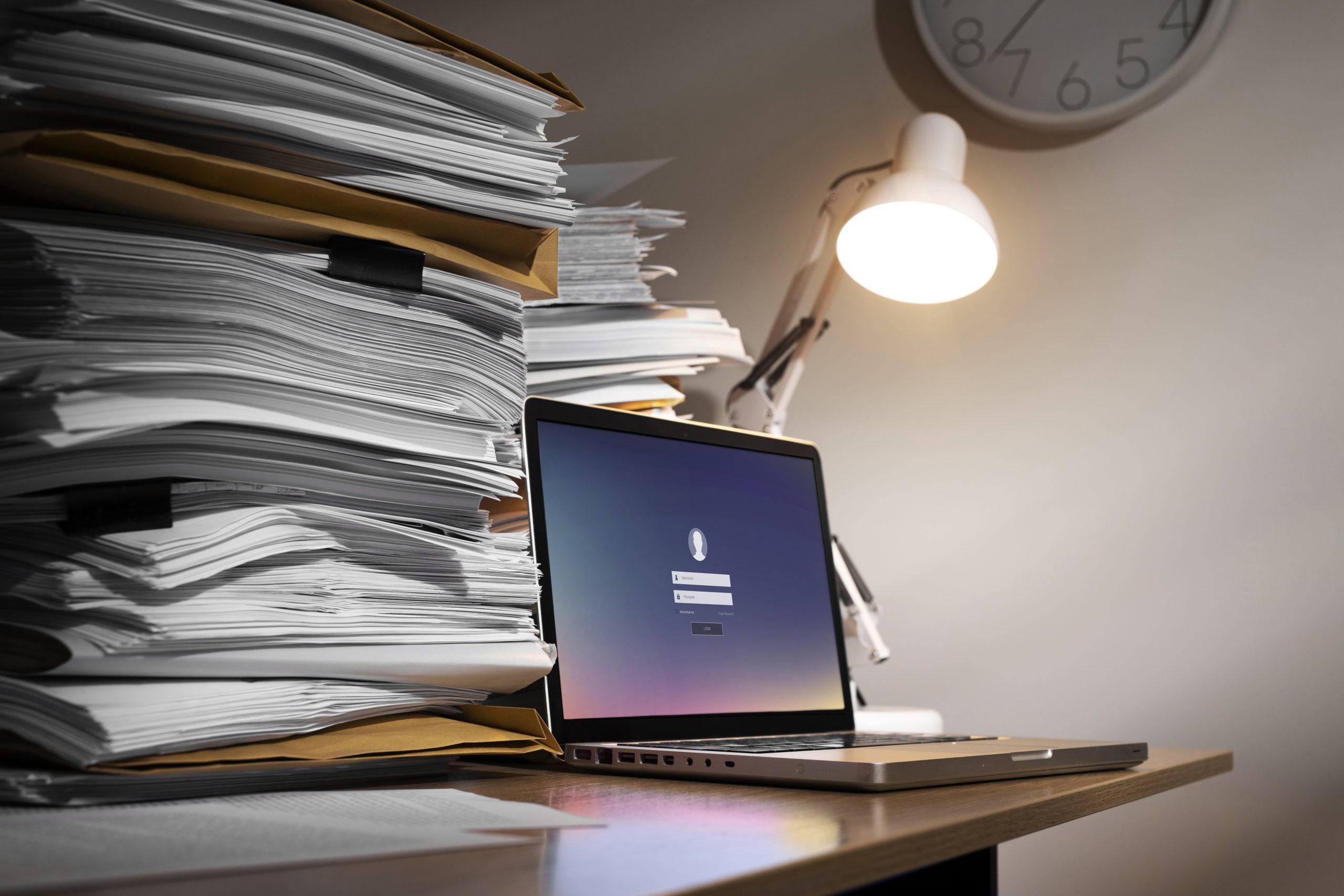
But there is one important issue that is often overlooked: what happens to the decades of existing paper records that are still sitting in file cabinets, basement storage rooms, archive boxes, map drawers, and off-site storage?
For many building departments, the answer is that the new online permitting system handles new activity going forward, while the historical records remain paper-based. That creates a split system: modern digital permitting on one side, and years of legacy property files on the other. Staff still need to leave their desks, search through paper folders, pull boxes, locate plans, copy documents, and manually respond to requests.
Online Permitting Does Not Solve the Paper Backlog
An online permitting platform can improve the way new applications are submitted and processed. However, it does not automatically convert old files into searchable electronic records.
Most building departments have decades of records tied to individual parcels, addresses, owners, projects, permits, certificates of occupancy, violations, inspections, plans, surveys, and zoning decisions. These records are often essential when reviewing new applications or responding to property inquiries.
For example, when a contractor applies for a renovation permit, staff may need to review the original certificate of occupancy, prior permits, variances, old plans, inspection records, or open violations. If those documents are still in paper form, the department is still dependent on manual file retrieval.
That means the municipality may have an online front door, but the work behind the counter remains paper-driven.

Staff Time Is One of the Biggest Hidden Costs
Paper records consume staff time every day. Employees spend time locating files, re-filing folders, copying documents, scanning individual pages as needed, answering public record requests, and searching for misplaced documents.
In many departments, experienced staff know where things are because they have worked with the files for years. That knowledge is valuable, but it is also risky. When employees retire, leave, or change roles, the municipality can lose a great deal of institutional knowledge.
Digitizing records reduces that dependency. A properly indexed digital archive allows authorized staff to search by address, section-block-lot, permit number, owner name, document type, date, or other useful fields. Instead of searching through a room full of folders, staff can retrieve the correct record from their workstation.
That is not just a technology improvement. It is an operational improvement.
Better Access for Staff, Officials, and the Public
When records are digitized, access can be faster, more controlled, and more consistent. Staff can respond to inquiries more efficiently. Multiple authorized users can view the same file at the same time. Records can be searched without physically removing original folders from storage.
Building department records are used by many people: inspectors, clerks, code enforcement officers, planning and zoning staff, assessors, attorneys, engineers, homeowners, contractors, title companies, and FOIL requestors.
This can be especially helpful when files are needed by more than one department. A building file may also be relevant to planning, zoning, fire prevention, code enforcement, tax assessment, engineering, or legal review. Digitization allows departments to work from the same record set rather than passing paper folders back and forth.

Reducing Risk to Important Records
Many building department records are permanent or long-term records. Some may be needed for the life of a property. Yet those records are often stored in areas that were never designed for long-term preservation.
Paper can be damaged by water, fire, mold, humidity, pests, handling, and general wear. Large-format plans may be folded, torn, faded, or difficult to reproduce. Older records may exist only as a single paper copy.
Digitization creates a usable electronic version of the record and helps protect the information from loss. While proper retention and records management policies still matter, having a high-quality digital image with searchable indexing can greatly reduce the daily handling of fragile originals.

Good Indexing Is Just as Important as Scanning
Scanning alone is not enough. The real value comes from how the records are organized, indexed, and maintained over time.
For building department records, indexing should be designed around how staff actually search. Common index fields may include address, parcel number, permit number, application number, document type, owner name, project name, date, and department category. Large-format drawings may need to be captured and indexed separately from standard letter and legal-size documents.
A thoughtful indexing plan makes the difference between a folder full of images and a usable electronic records system.
This is also where a formal document management or enterprise content management system can be especially valuable. Rather than relying on inconsistent folder names or informal file-saving habits, a well-designed system can enforce standardized indexing, required metadata fields, naming conventions, document types, security rules, and retention practices.
Making Digitized Records Useful Over Time
Accurate metadata is critical. If records are indexed inconsistently, staff may have difficulty finding them later, even if the documents were scanned correctly. A document management system can help reduce those risks by guiding users to enter the right information in the right fields and by applying consistent rules across departments.
This is where experience matters. A successful project should start with understanding the department’s workflow, file structure, record types, retrieval needs, and future software plans. The goal is not simply to scan paper. The goal is to make records easier to find, use, share, protect, and preserve.
Digitization Supports Future Systems
Municipalities considering online permitting, document management, workflow automation, or public portals should view legacy scanning as part of the larger modernization effort.
A new permitting system is more effective when staff can easily access the historical records needed to make decisions. Digitized records can also support future integrations, electronic workflows, FOIL response processes, disaster recovery planning, and long-term records management strategies.
A formal document management or enterprise content management system can provide the structure needed to manage these records properly after they are digitized. These systems can help maintain accurate metadata, control access by department or user role, support version control, apply retention rules, and make records easier to retrieve across different departments.
In many cases, digitizing legacy building records before or alongside an online permitting rollout can make the new system more useful from day one. When historical records are captured, indexed, and managed in a structured content management system, the municipality is better positioned to connect records with future permitting, workflow, public access, and records retention initiatives.
A Practical Approach
Building departments do not always need to send out every record at once. A project can be phased by record type, date range, location, department priority, or storage area. Some municipalities begin with the most frequently requested records, such as property files, certificates of occupancy, permits, or large-format plans. Others begin with the oldest or most at-risk records.
A phased approach allows the municipality to make progress without overwhelming staff or disrupting daily operations.
IMA has worked with public-sector and private-sector organizations for decades to convert paper, books, microfilm, large-format drawings, and other records into searchable digital files. For municipalities, the most successful projects are the ones that are planned carefully, indexed properly, and designed around the way staff actually work.
Ready to Move Forward
Online permitting is an important step forward, but it should not leave decades of paper records behind. Building departments that digitize their legacy files can improve staff efficiency, reduce records risk, support better public service, and make future technology investments more effective.
Before launching a new digital permitting process, municipalities should ask a simple question:
Question to ask: Can our staff quickly find the records they need to support it?
If the answer is no, now may be the right time to begin planning a building department records digitization project.
IMA can help municipalities evaluate their existing records, develop a practical scanning and indexing strategy, and create a searchable digital archive that supports both today’s needs and tomorrow’s systems.
Ready to plan the next step? IMA can help municipalities evaluate existing building department records, develop a practical scanning and indexing strategy, and create a searchable digital archive that supports current operations and future systems. Contact us today to get started.